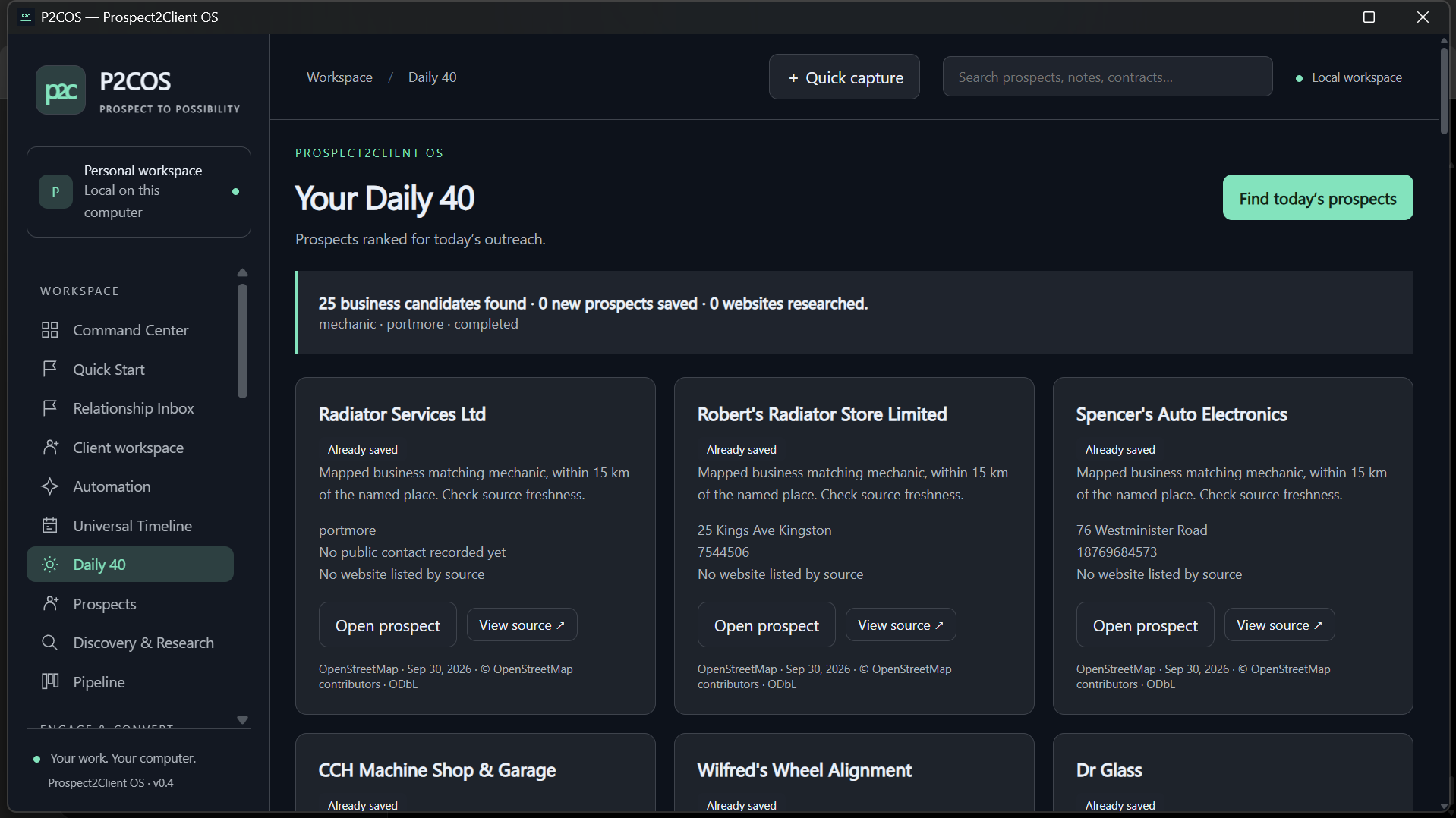
A daily prospecting target can create useful discipline, but only if the number serves the process instead of replacing it. Twenty relevant prospects are more valuable than hundreds of names you know nothing about.
Start with one narrow segment
Do not begin the day by searching for “businesses that might need clients.” Pick one segment: local accounting firms, boutique agencies, independent consultants, managed-service providers, or another group with a reasonably similar sales motion. A narrow segment makes comparison easier and helps you notice patterns.
Use a fixed research checklist
- Business or person: name, website, location, industry, and role.
- What they sell: the main service or offer and who buys it.
- Growth signal: hiring, advertising, new services, active posting, expansion, or visible lead-generation activity.
- Potential pain: scattered prospecting, inconsistent follow-up, weak pipeline visibility, or a manual sales process.
- Personalization hook: one specific observation you could mention naturally.
- Contact route: the most legitimate and relevant way to reach them.
- Next action: contact now, research more, nurture, or skip.
Score before you send
A simple score helps protect your time. Rate the prospect on fit, visible need, reachability, timing, and how strong your personalization angle is. The score is not a prediction of who will buy. It is a way to decide who deserves attention first.
The purpose of a daily target is consistency. The purpose of research is relevance. Do not sacrifice the second to hit the first.
Work in passes
Instead of fully researching one lead at a time, try three passes. First, build a candidate list. Second, remove obvious weak fits. Third, complete deeper research only on the strongest candidates. This keeps you from spending ten minutes on a prospect you should have rejected in thirty seconds.
End the day with clean records
Every researched prospect should finish the day with a clear status and next action. If you contacted them, record the message and follow-up date. If you skipped them, record why. Clean records make tomorrow easier and turn prospecting into a system that improves over time.
P2COS note: this workflow is the operating model we are designing around: find, research, qualify, contact, follow up, convert, learn, and improve. See the P2COS workflow.